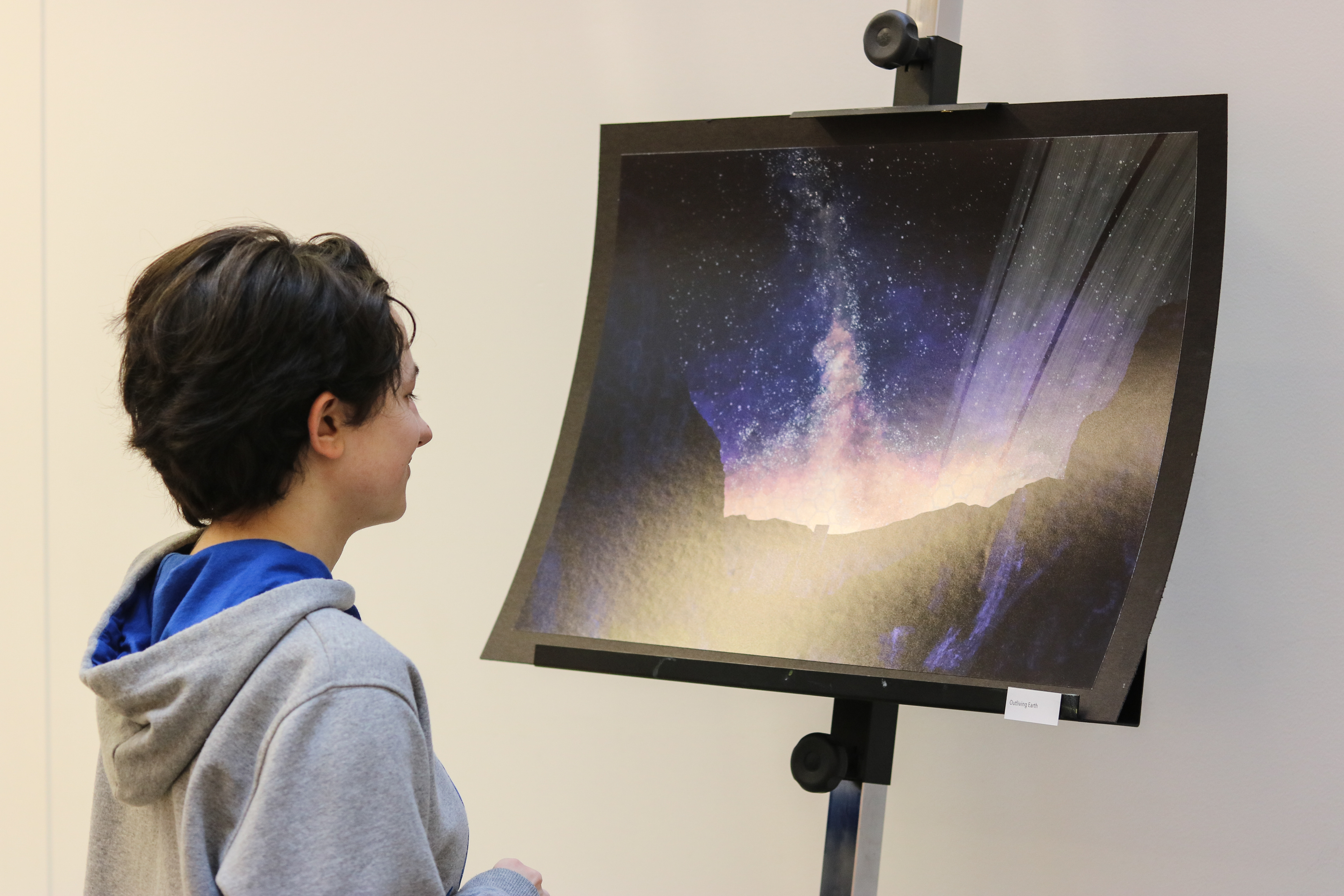
Outliving Earth
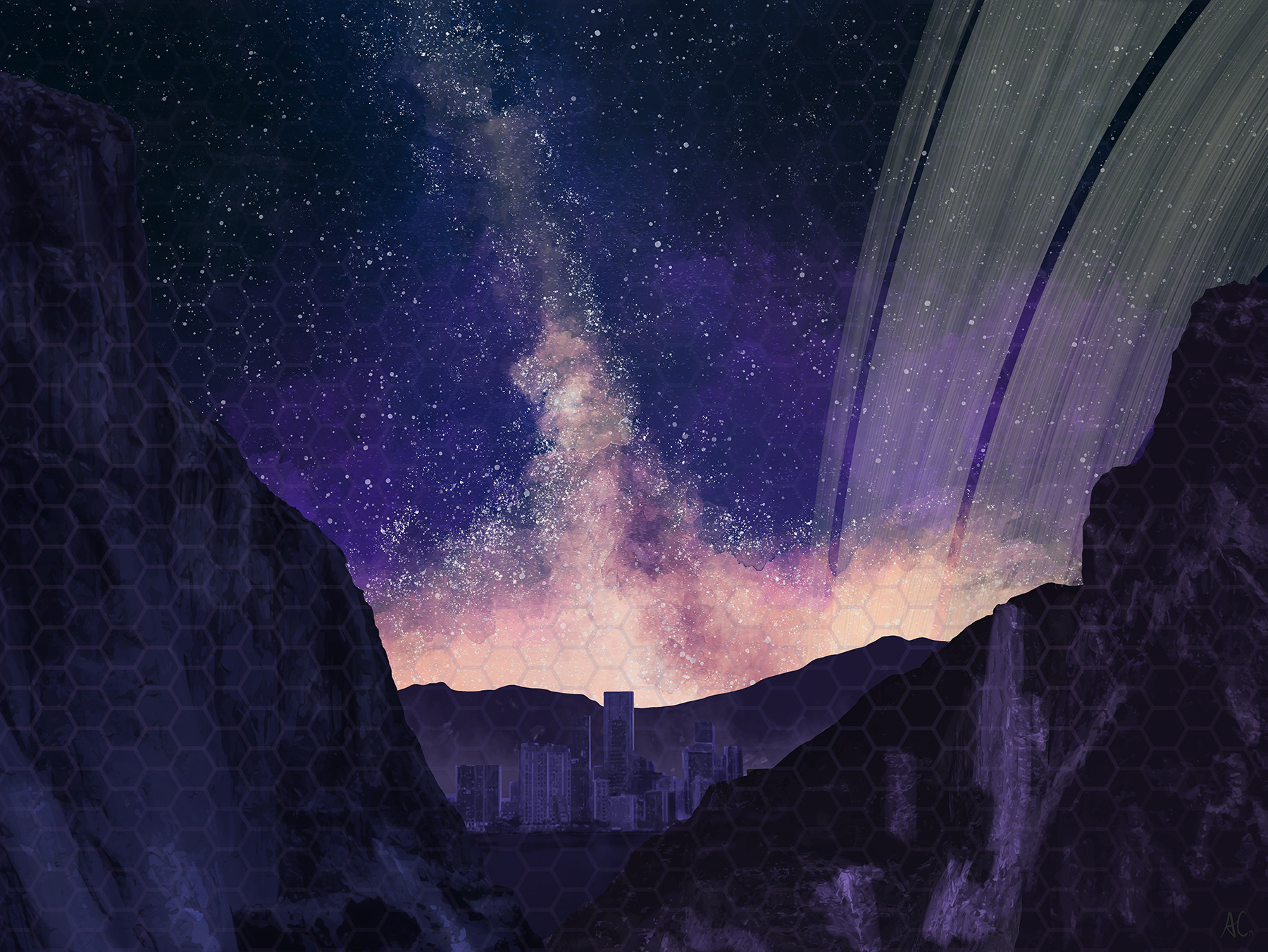
Outliving Earth explores humanity's inevitable need to find another planet to live on, whether driven by human-caused destruction, the sun's eventual expansion, or a meteor strike. Inspired by Giacomo Balla's Futurism, the piece offers a contemporary take on the movement: rather than cars and the Industrial Revolution, its subject is space travel.
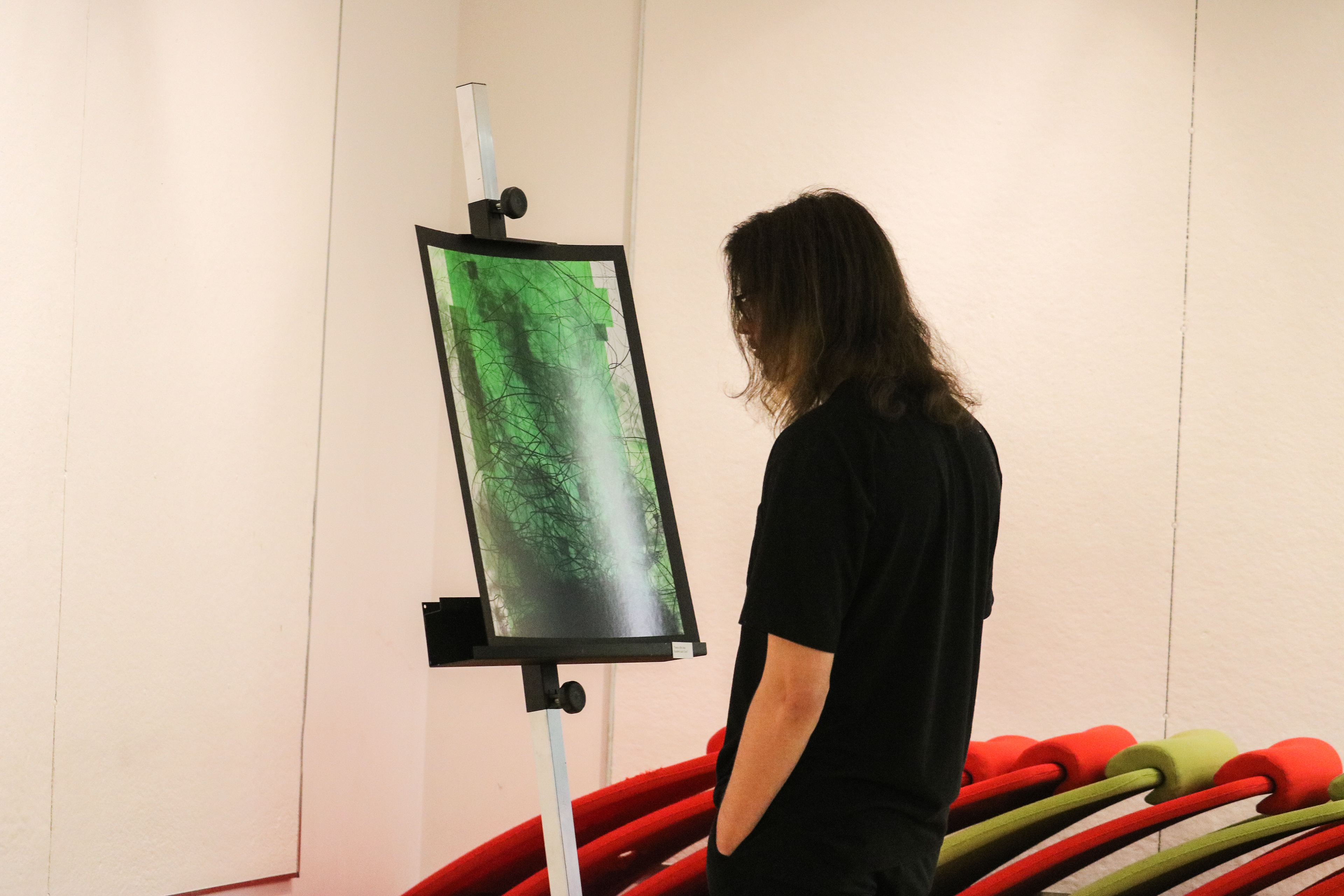
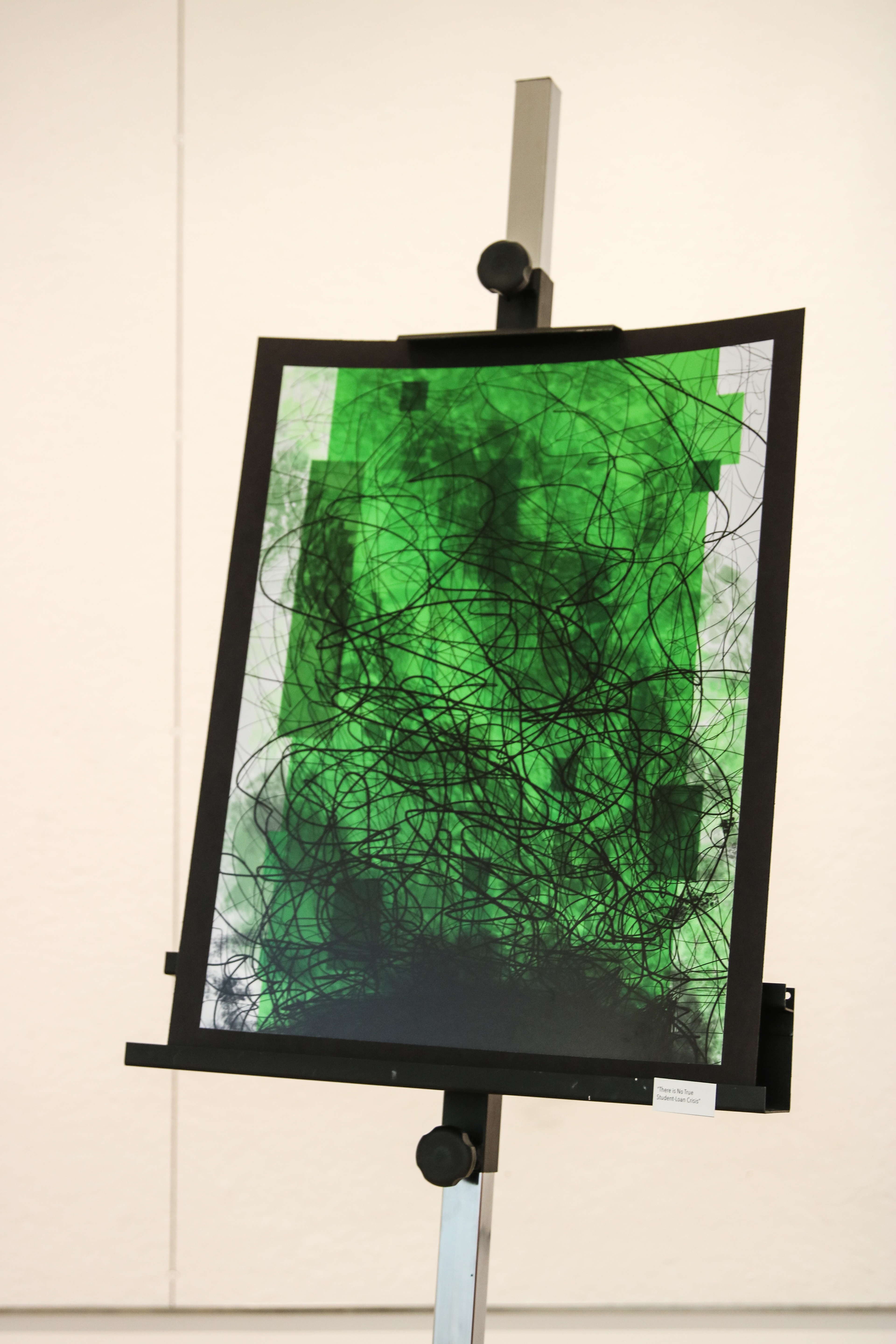
"There is No True Student-Loan Crisis"
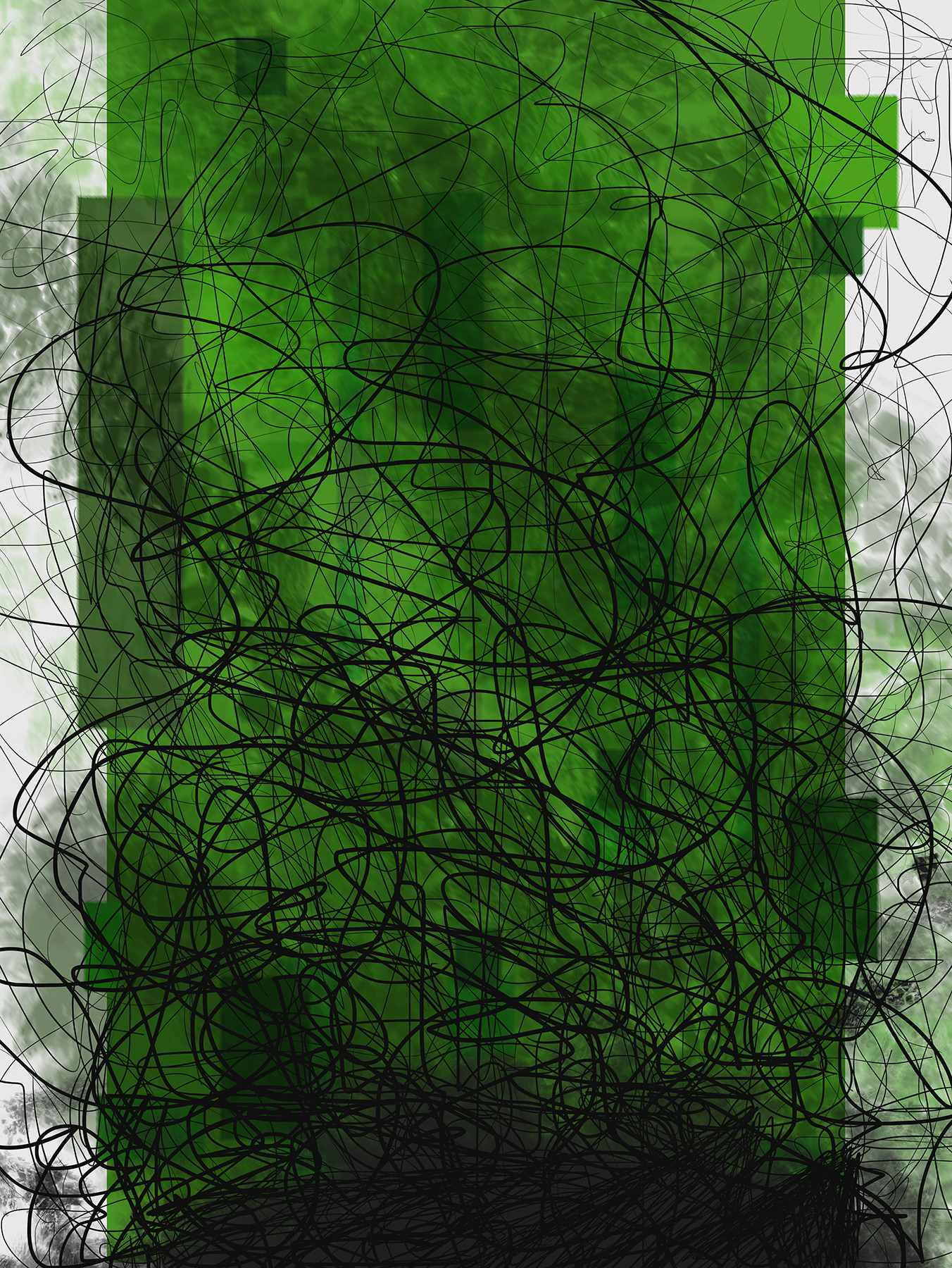
This painting responds to an op-ed of the same title, written by Dr. Howard, then President of Robert Morris University, for the Pittsburgh Post-Gazette, arguing against the existence of a student loan crisis. Many RMU students countered by speaking publicly about their loan debt and anxiety over repaying it. Diagonal green brushstrokes represent money falling and overwhelming the black figure of a student at the bottom of the painting, while chaotic black strokes convey the disorienting nature of debt. The strokes grow denser toward the bottom, representing stress and money piling up and spilling over, uncontained.
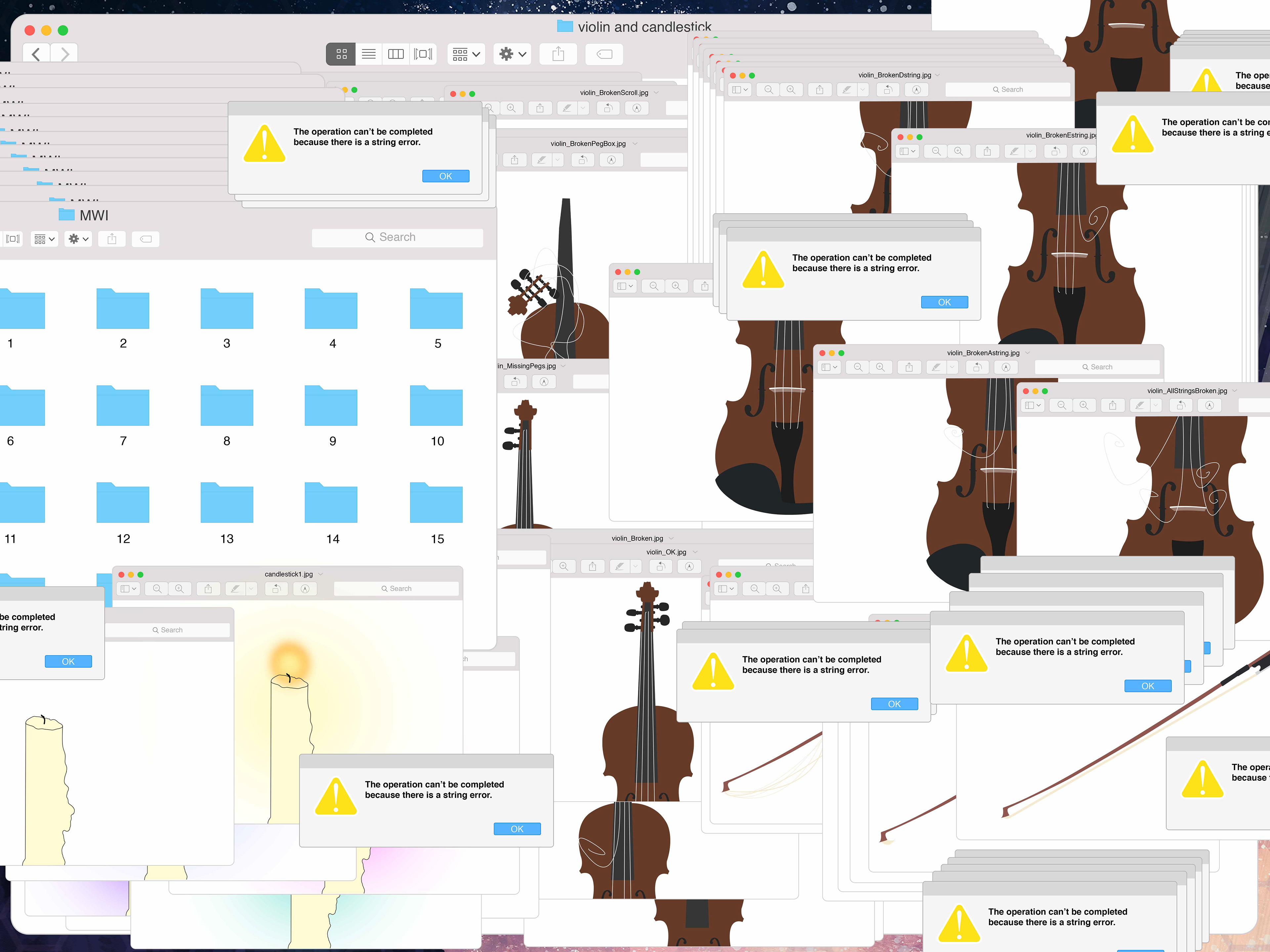
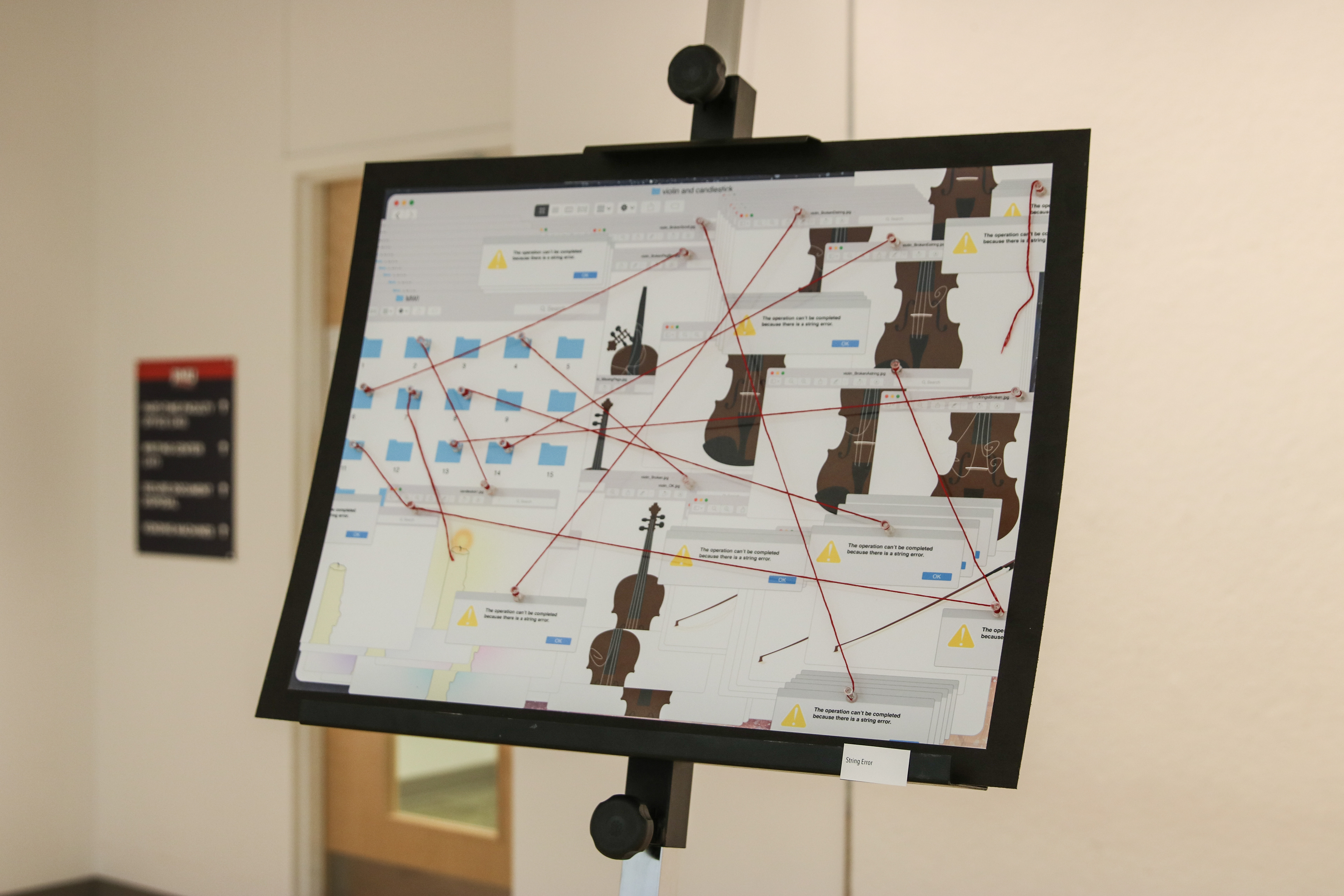
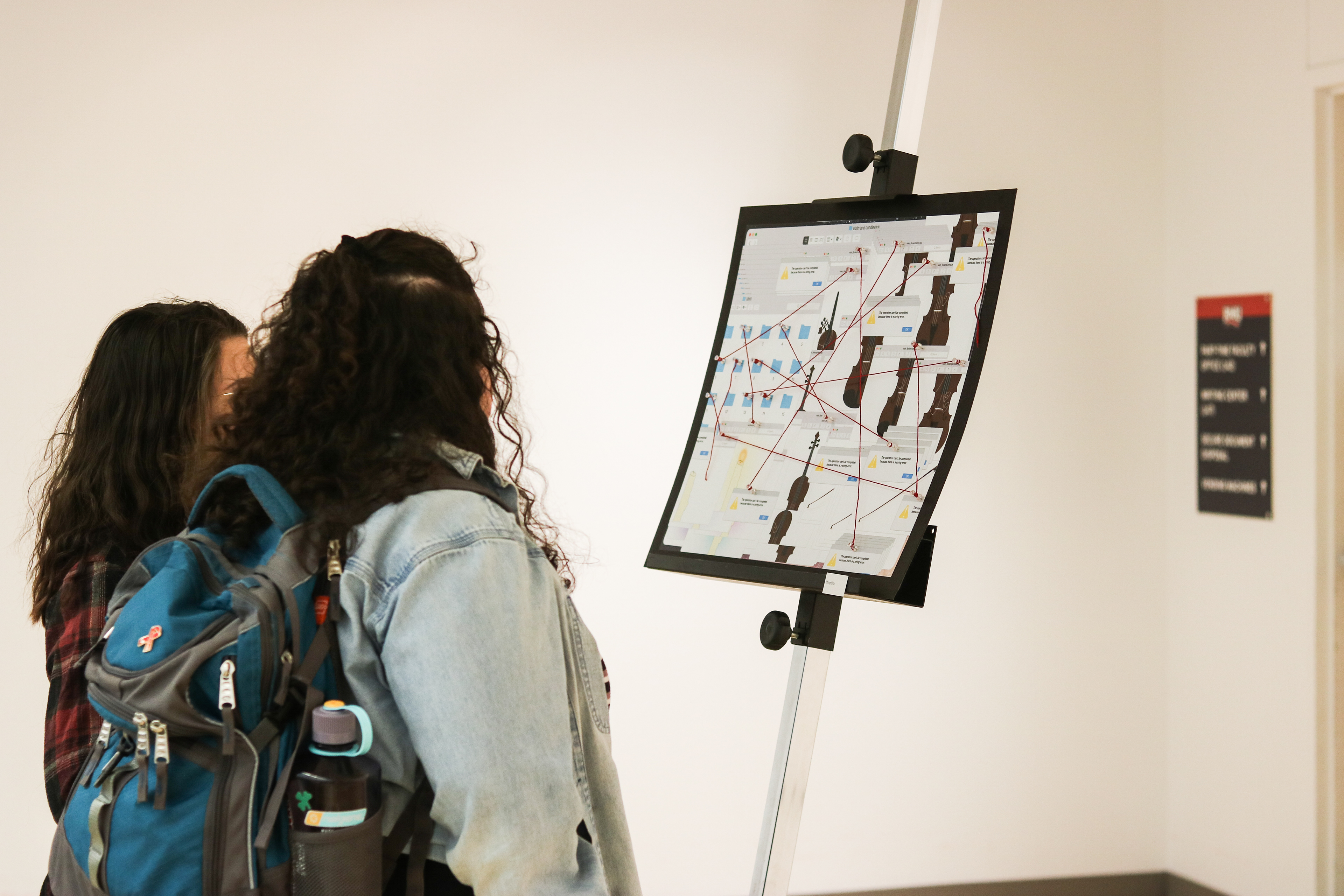
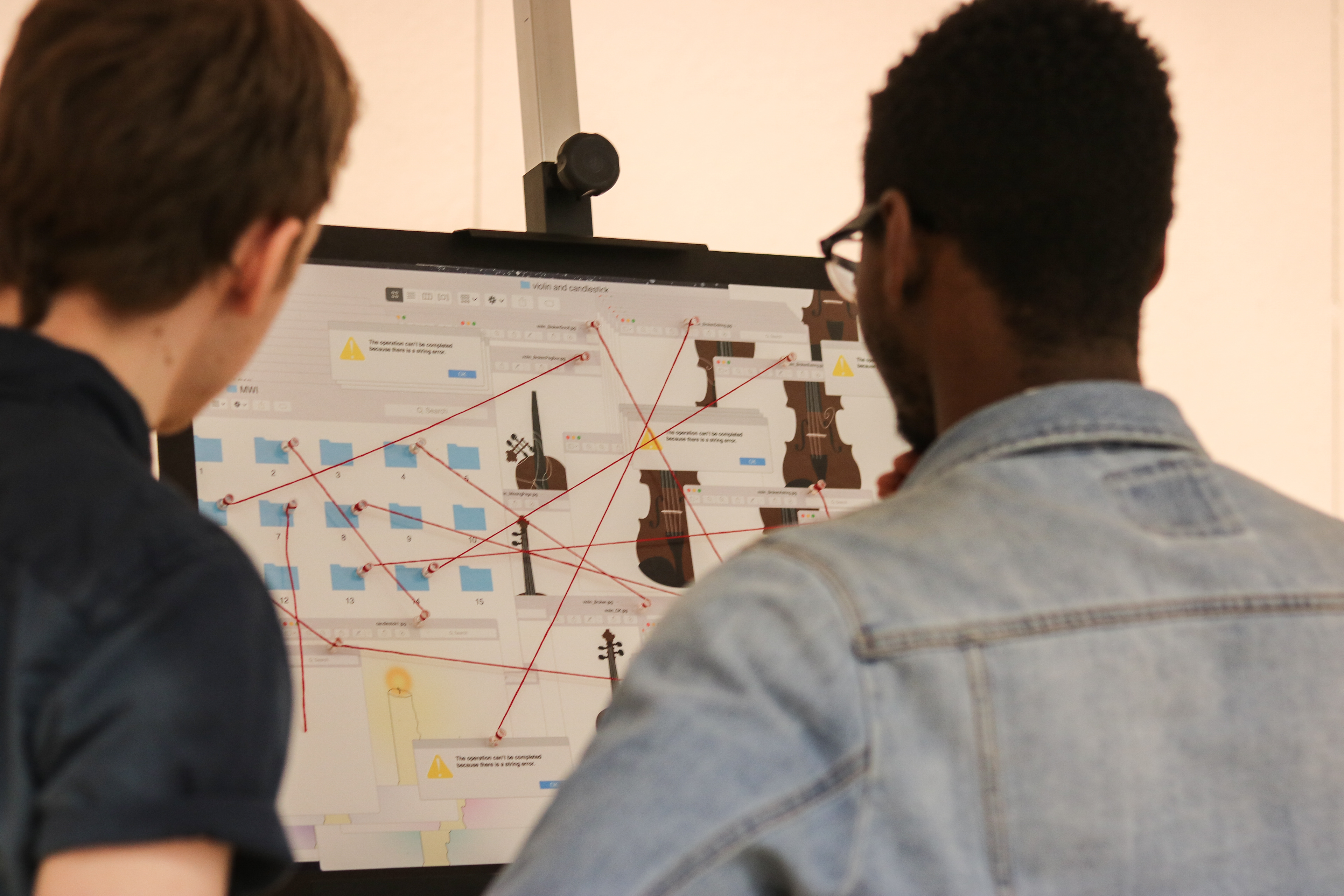
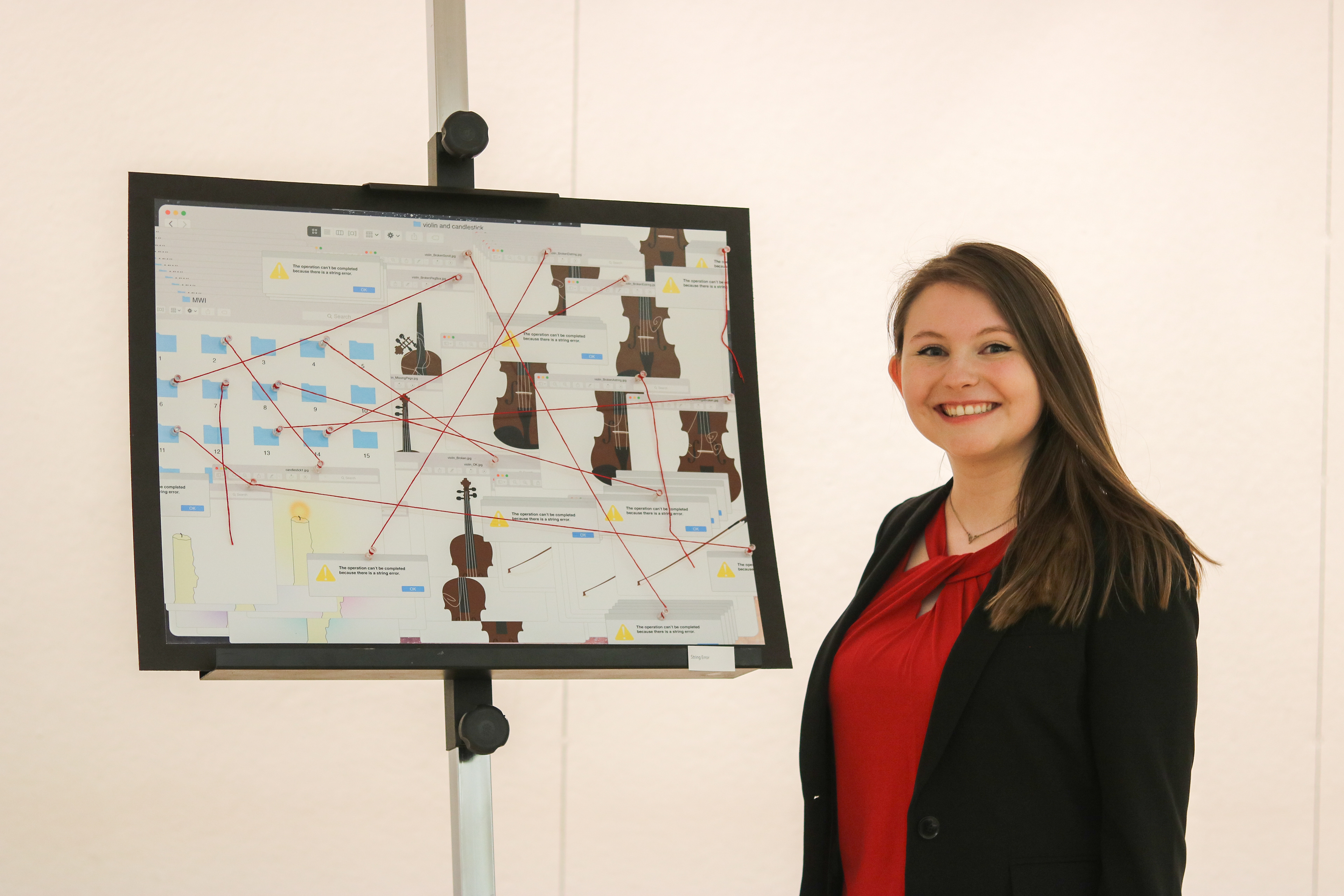
String Error (digital copy)
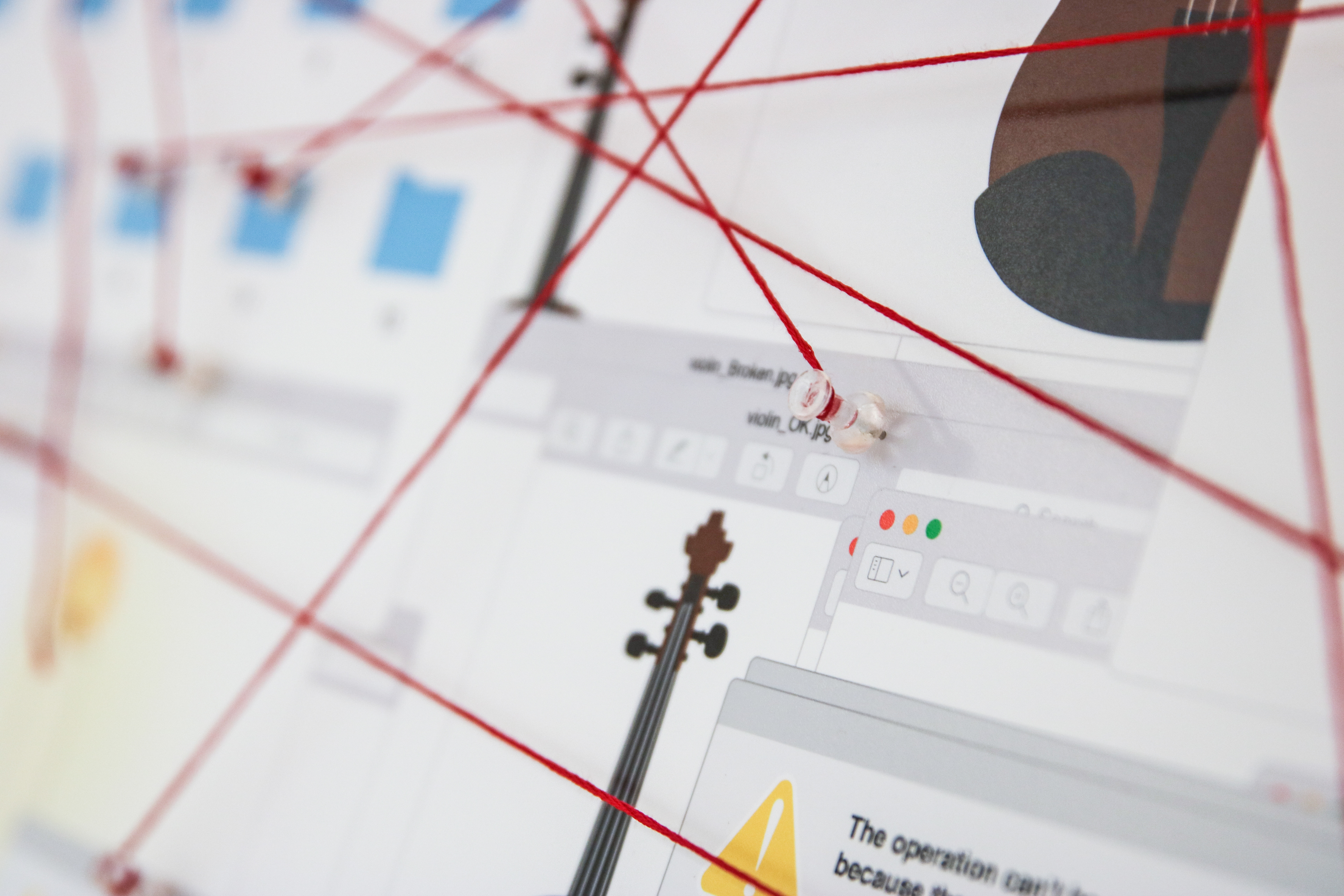
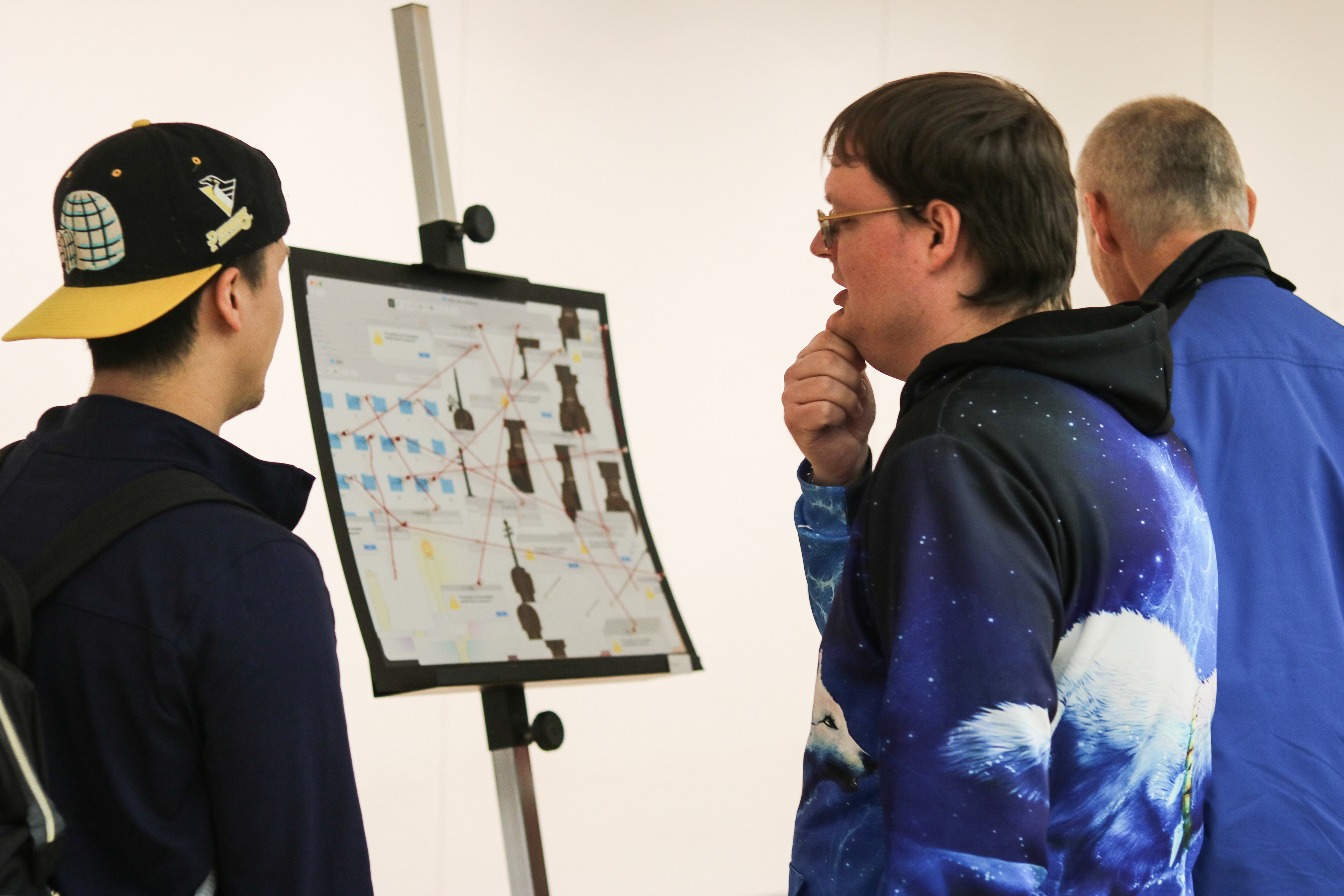
String Error responds to Georges Braque's 1910 painting Violin and Candlestick, an example of Analytic Cubism that depicts objects on a flat canvas in four dimensions, drawing on Euclidean geometry and other branches of higher mathematics. Rather than working from Euclidean geometry, this piece illustrates the Many-Worlds Interpretation (MWI) of quantum mechanics, which holds that many worlds exist in parallel at the same space and time as our own, removing randomness from physics. The composition depicts a folder of different worlds unfolding simultaneously, flooding the screen with every possible outcome. In the physical version, the worlds are connected with red string, evoking a detective linking evidence to catch a suspect.
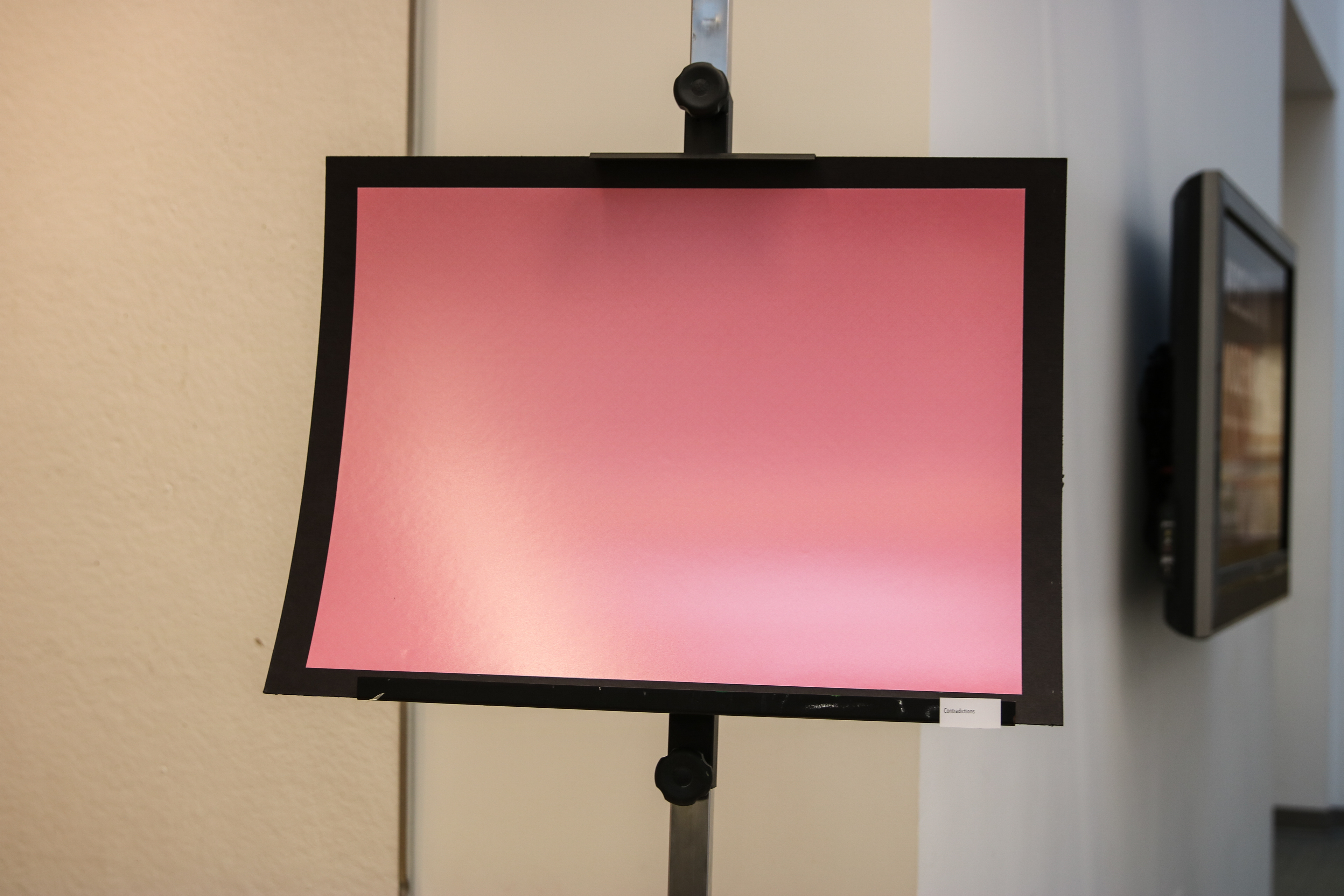
Contradictions
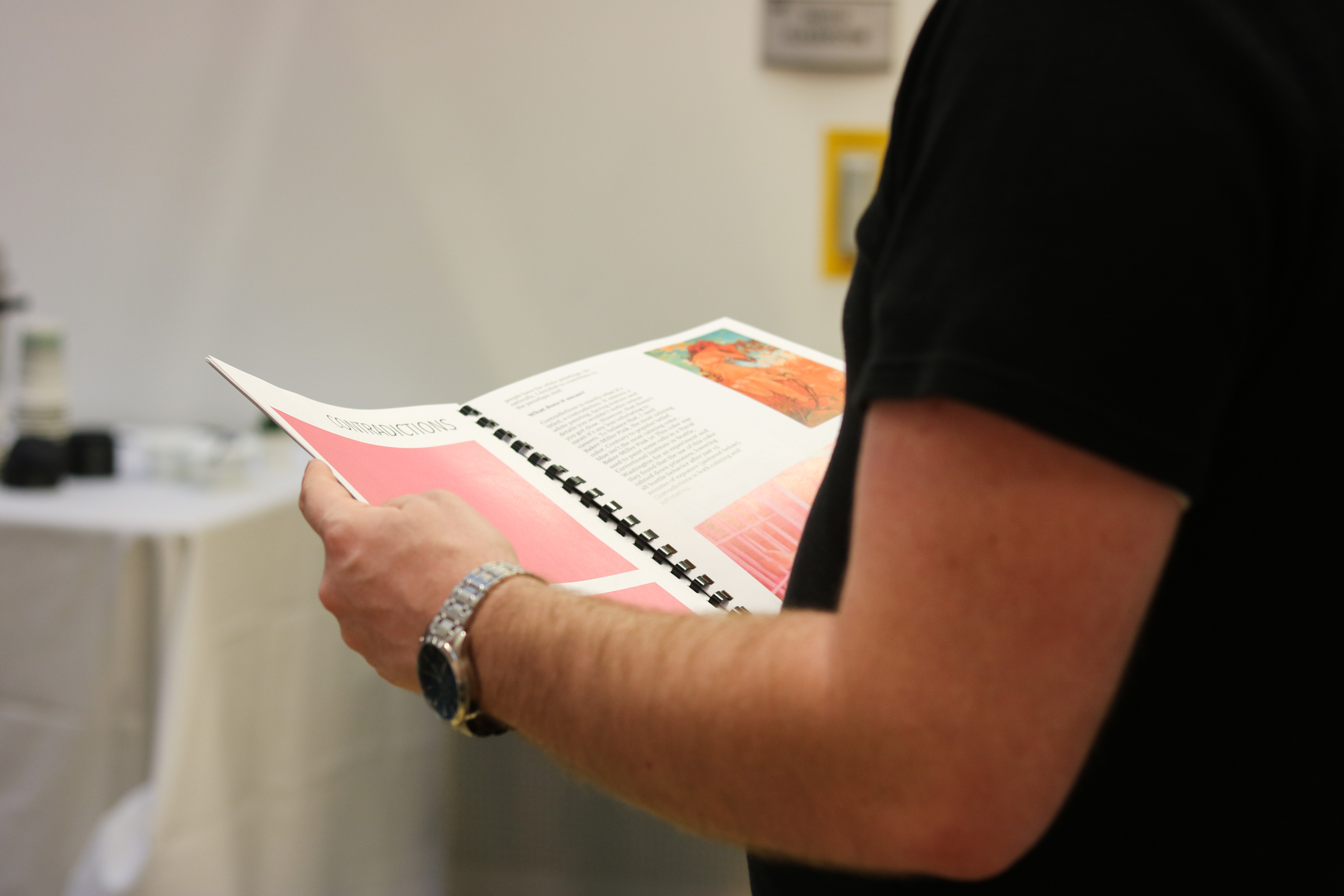
Contradictions lives up to its title. At first glance, it mimics the all-white paintings that have drawn public frustration for their apparent simplicity, but closer inspection reveals texture and detail. The piece is painted in Baker-Miller Pink (not blue, contrary to popular belief) the color shown to have the most calming effect. Baker-Miller Pink was used to paint cells at a Naval Correctional Institute in Seattle, Washington, in an experiment that found it lowered hostile behavior in prisoners within 15 minutes of exposure. The piece participates in the ongoing paradigm shift toward solid-color paintings in contemporary art.

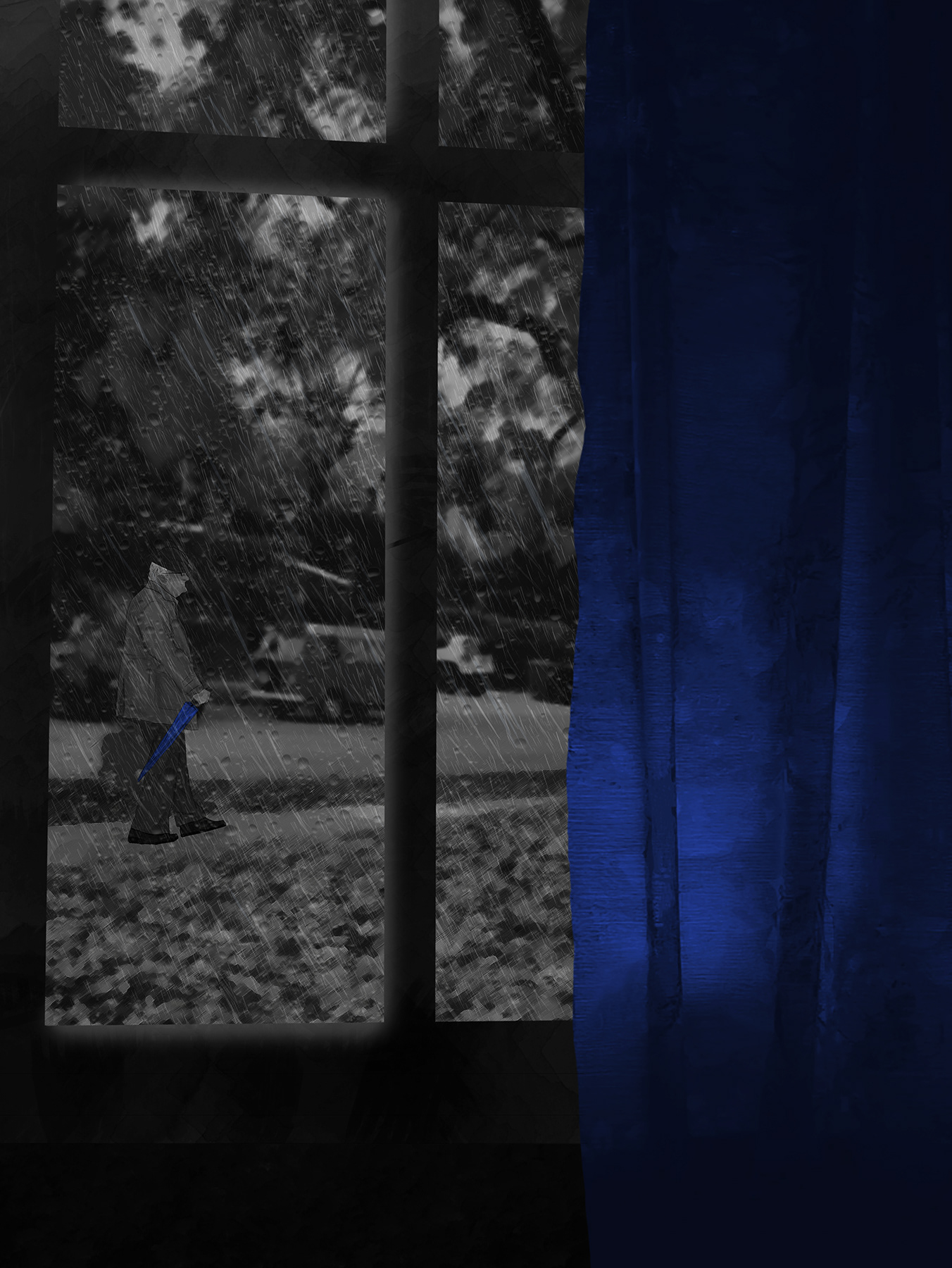
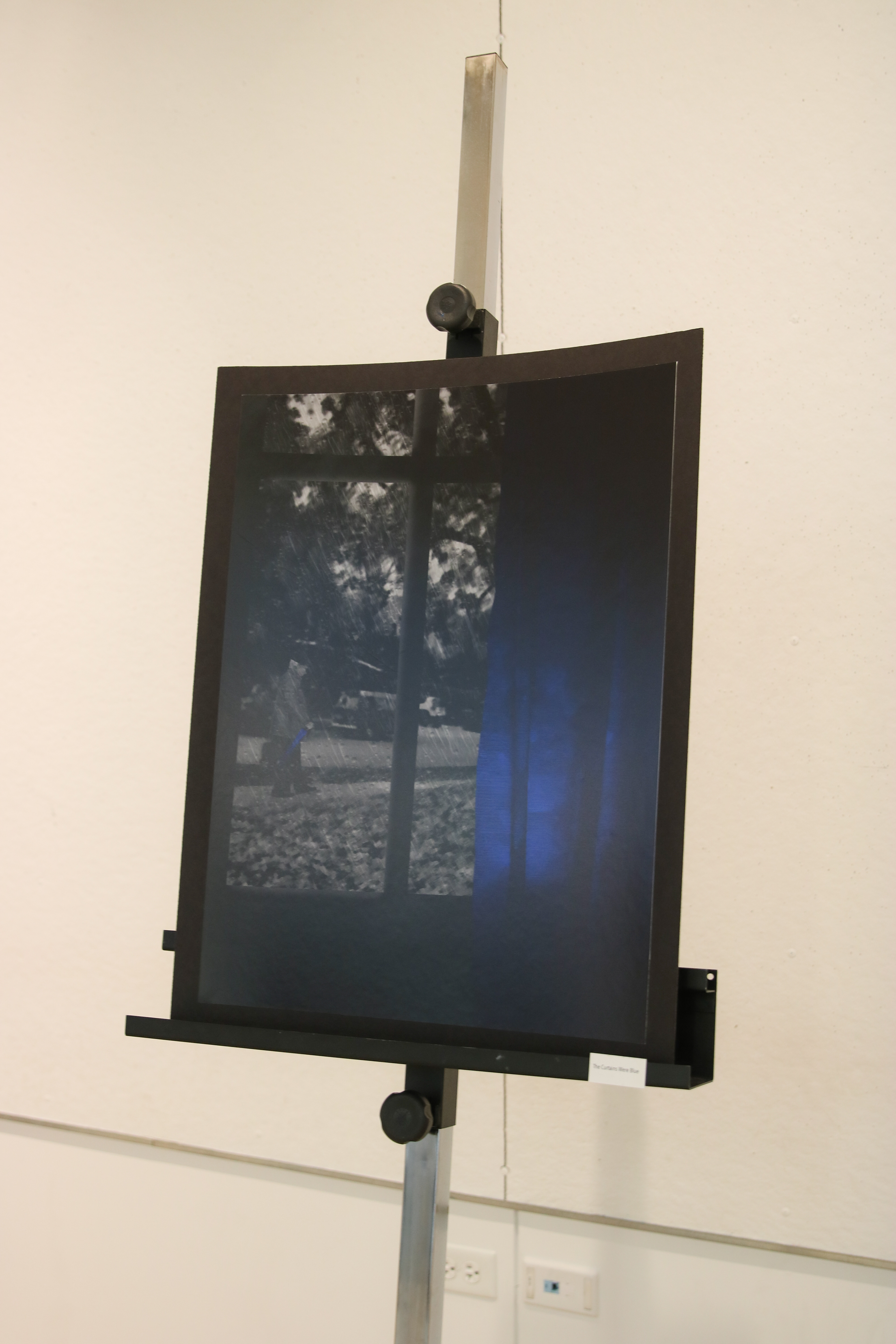
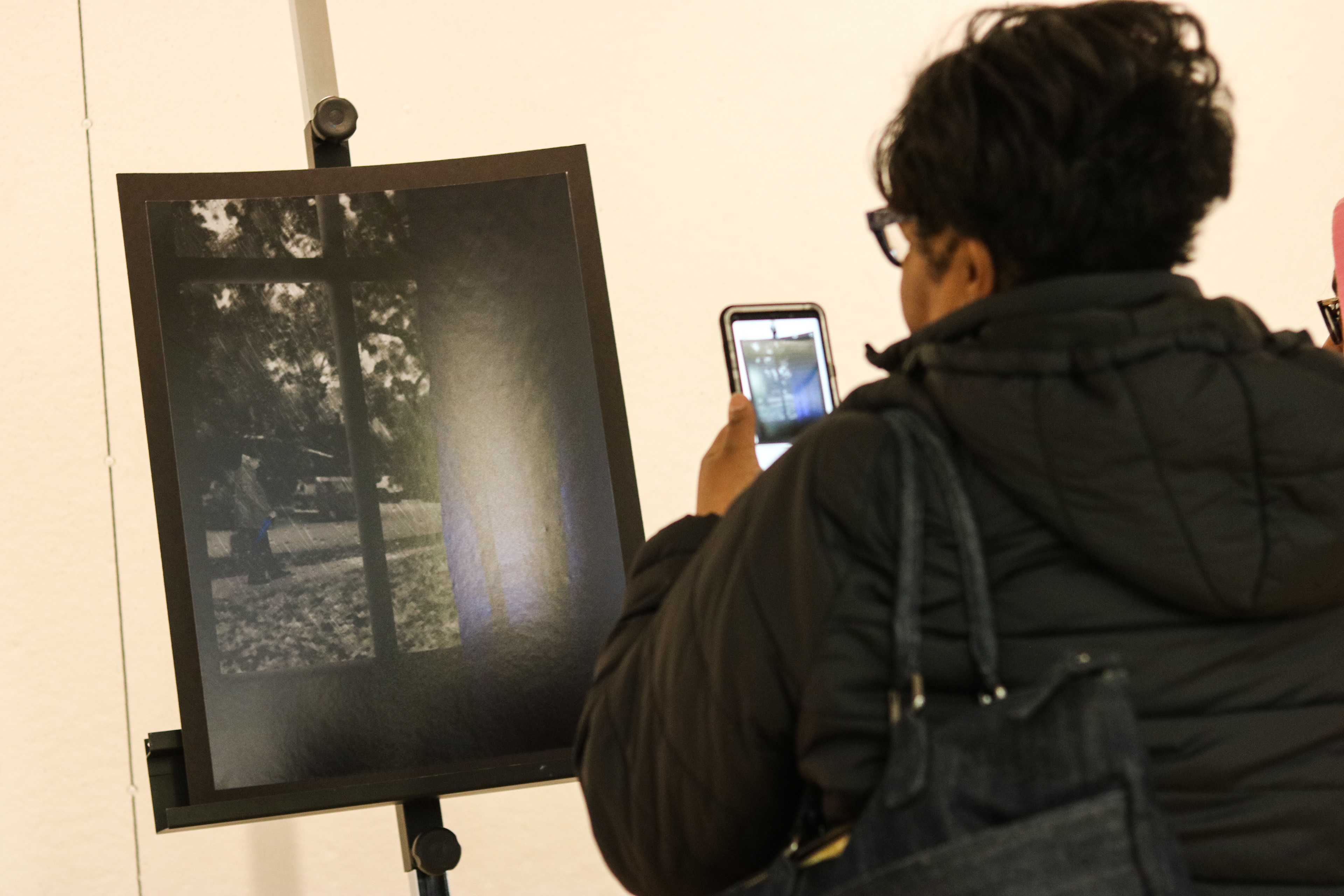
The Curtains Were Blue
René Magritte was known for depicting ordinary objects in unusual ways while insisting his paintings held no deeper meaning, a claim that sparked endless debate, as viewers searched for symbolism he denied intending. Inspired by Magritte, this piece also means nothing. Without knowing its title, a viewer might assume it depicts depression, given its dark colors, somber subject, and blue highlights. In fact, the title refers to a phrase popularized to mock English teachers who read too much symbolism into literary details, insisting that blue curtains represent a character's depression when they may simply be blue.
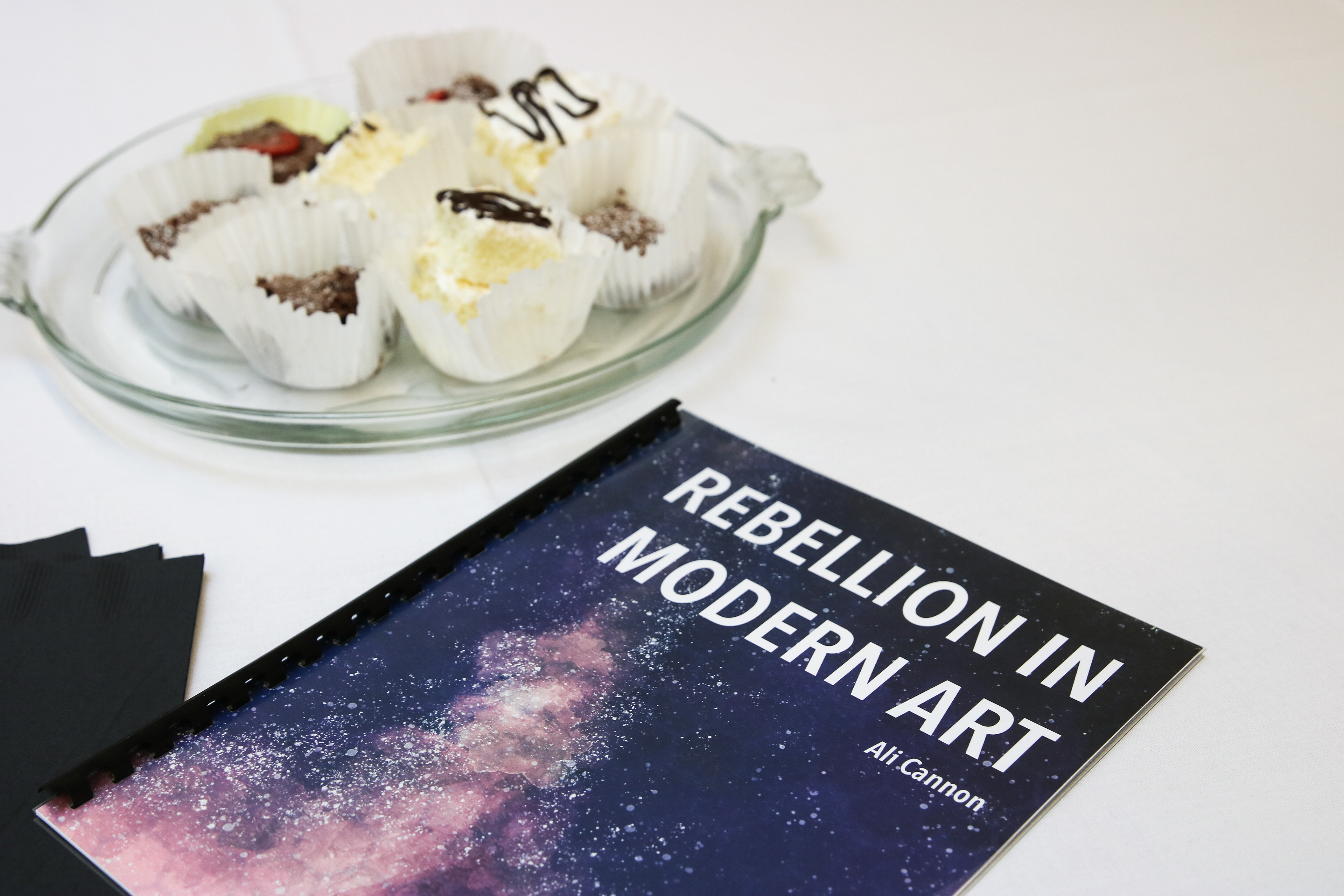
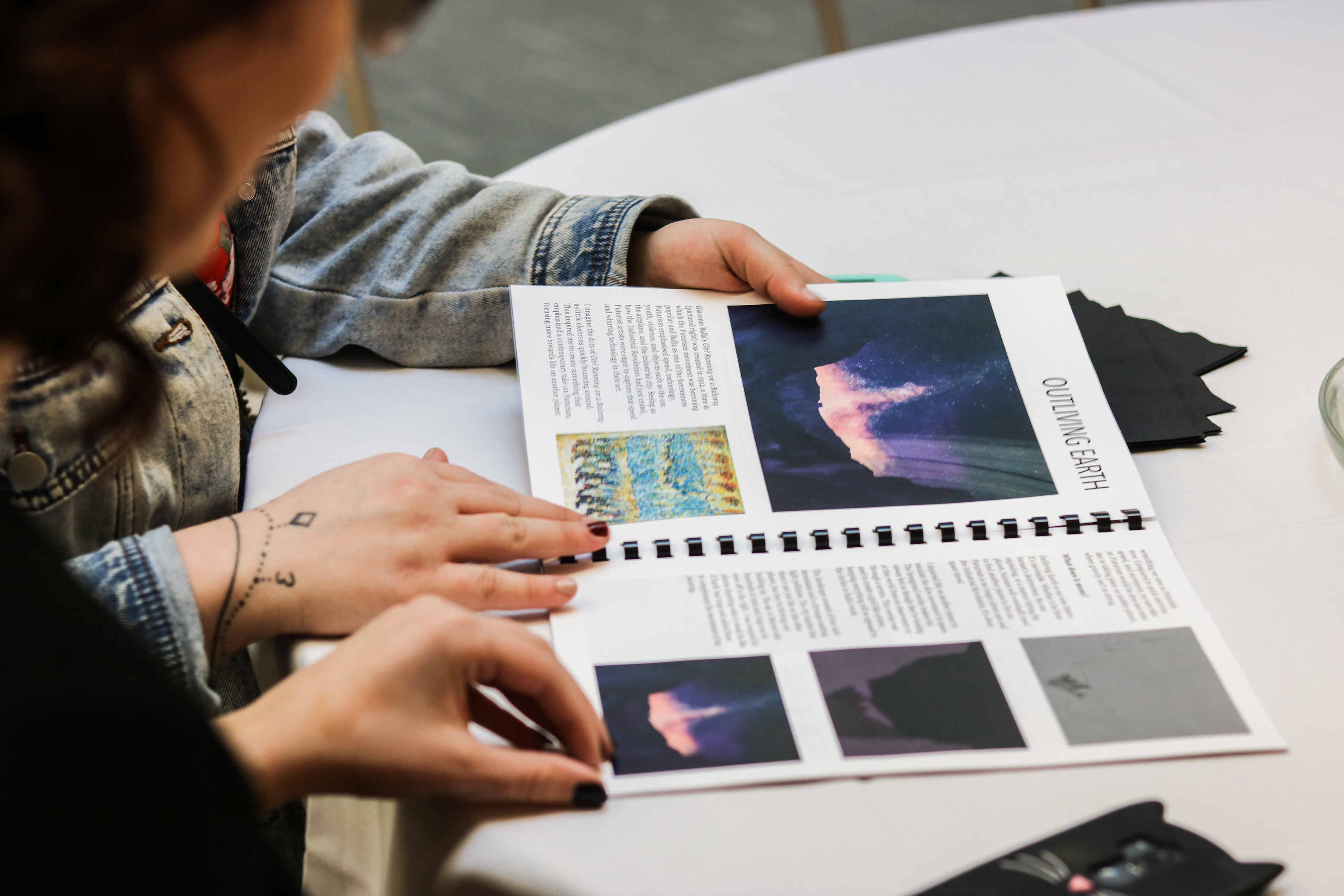
Process Book
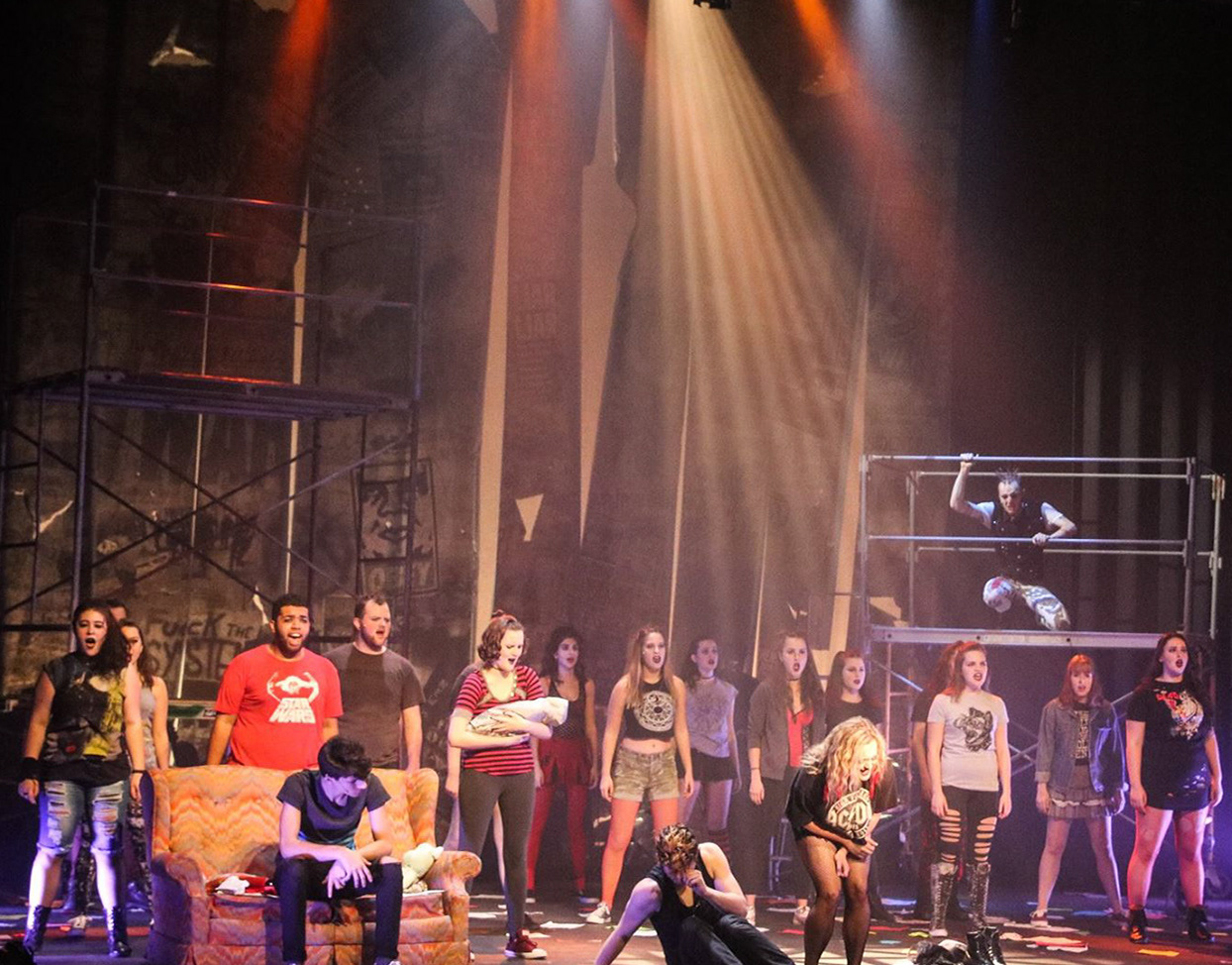
Photos from Exhibition
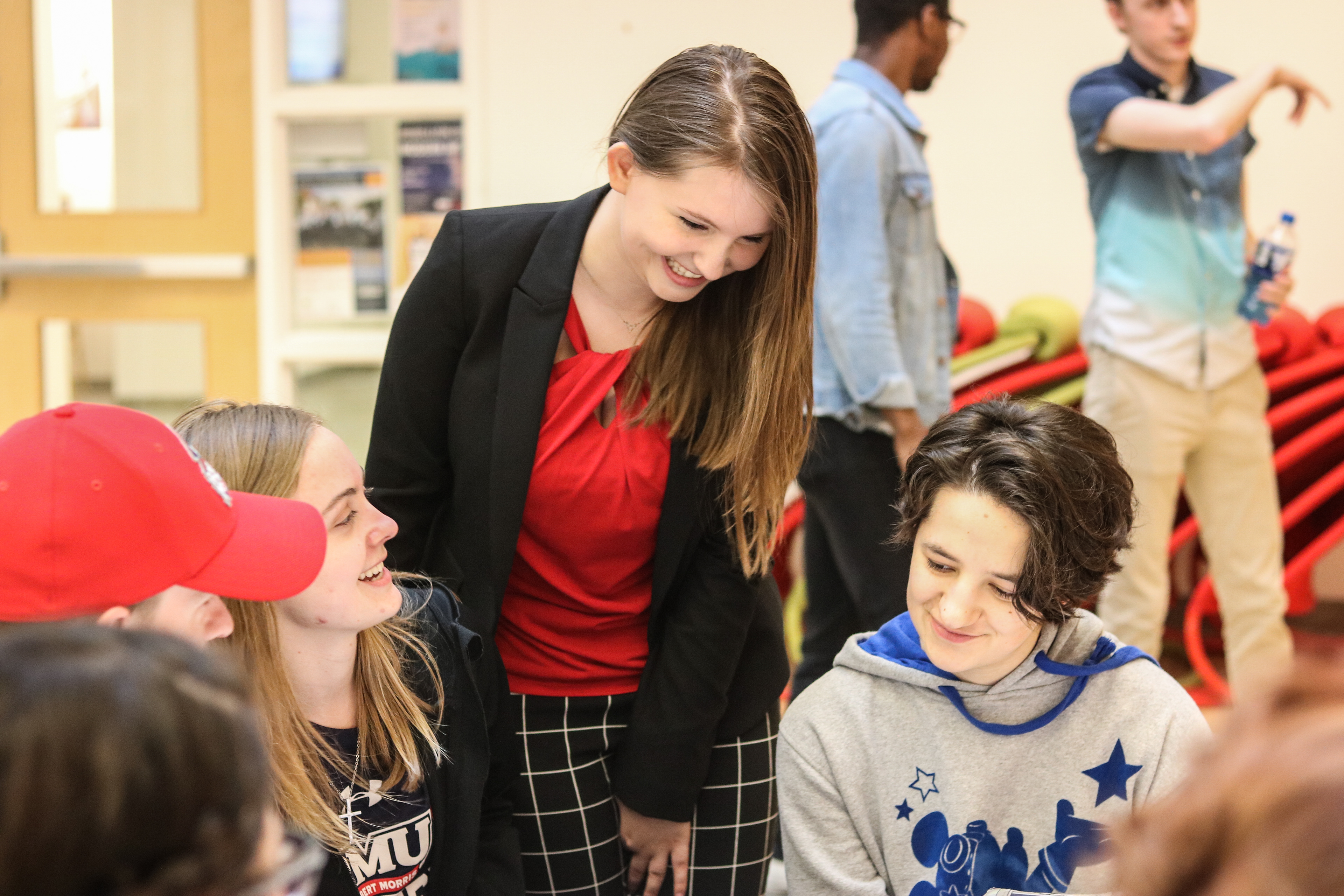
Photos from exhibition courtesy of Beth Barbis.